“Europe can flourish where cooperation is the norm”
Freiburg, 18/05/2026
This year’s Dies Universitatis on 19 May 2026 will mark the tenth anniversary of the European Grouping of Territorial Cooperation (EGTC) ‘Eucor – The European Campus’. What does this form of European cooperation mean for the University of Freiburg, the region and Europe? A conversation with Prof. Dr Melanie Arndt, Vice Rector for Internationalisation and Sustainability.

Prof. Dr Melanie Arndt, Vice Rector for Internationalisation and Sustainability. Photo: Patrick Seeger / Universität Freiburg
Ms Arndt, this year’s Dies Universitatis will focus, among other things, on cross-border cooperation in times of global crisis. What is Eucor doing in this regard?
In times of global crisis, uncertainty and anxiety tend to increase. Long-term partnerships such as Eucor provide a stable, reliable and trusting framework for cross-border cooperation. In this way, Eucor fosters a sense of security and facilitates understanding despite crises. And it pays off: together, we really are simply stronger. The Eucor universities pool expertise across borders, which benefits research and helps to find solutions to problems.
Eucor demonstrates how well-established European networks can function even in times of global crisis: researchers work together, and students move across borders as a matter of course. Here, Europe is not just a concept, but a way of life. It is therefore worth investing in European cooperation and building stable partnerships so that we can overcome challenging times together.
The Eucor EGTC has now been in existence for ten years. Why are we celebrating it at Dies Universitatis?
We are celebrating a real milestone. Since 2016, the five Eucor universities – the Universities of Basel, Freiburg, Haute-Alsace and Strasbourg, as well as the Karlsruhe Institute of Technology – have had a joint, permanent legal entity in the form of a European Grouping of Territorial Cooperation, or EGTC for short. This was a first at the time, as Eucor was the first EGTC between universities in Europe.
With the EGTC, a university network was transformed into an institution capable of taking action. Instead of project-based cooperation, there is now a permanent structure with shared governance and strategy, as well as its own administrative and coordination office working on behalf of all member universities. This may sound like a purely structural change, but it is highly relevant both politically and academically. As a result, cooperation has become reliable, long-term and strategic. Today, the network serves as a model for European university alliances.
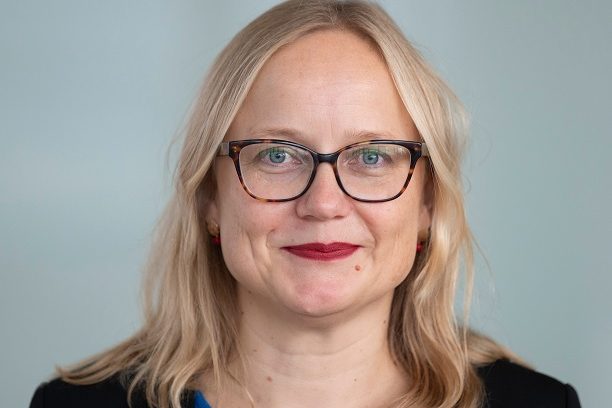
“The EGTC has transformed a university network into an institution capable of taking action. Instead of project-based collaboration, there is now a permanent structure with shared governance, a common strategy and its own public profile.”
Prof. Dr Melanie Arndt
Vice Rector for Internationalisation and Sustainability
What specific changes has EGTC status brought about for Eucor?
The universities retain their autonomy but operate under a single umbrella. This enables cooperation not only at a symbolic level, but also at an operational level. For example, the universities jointly apply for European funding and establish joint postgraduate programmes, for instance in the fields of quantum science and immunology. The ‘Eucor Seed Money’ funding instrument, awarded through the EGTC, has been particularly successful. Since 2017, it has helped launch a total of 73 joint projects, around a third of which subsequently secured national or European third-party funding. Between 2017 and 2021 alone, this mobilised around 12.5 million euros in additional funding.
For the University of Freiburg, internationalisation means more than just exchange programmes or individual projects; it refers to structurally embedded, long-term European cooperation.
What makes Eucor different from other university consortia?
The most distinctive feature is the geographical proximity. Renowned universities from three countries are located in the immediate vicinity, which is unique in Europe. This proximity facilitates the seamless integration of international elements into teaching and research: joint seminars, block courses or research projects can be organised on a physical basis. Students benefit from free mobility, whilst researchers benefit from shared infrastructure, joint professorships and networking opportunities. More than 50 student-focused events take place each year, promoting internationality and cultural diversity. Added to this is the strong regional roots. Eucor works closely with politics, business and civil society – for example, in the Eucor City Network, at events such as the BioCampus Investor Day or in knowledge transfer formats such as the MobiLab Roadshow. This consolidates a European research area that is firmly rooted both regionally and beyond the academic sphere.
“For the University of Freiburg, internationalisation means more than just exchange programmes or individual projects; it means structurally embedded, long-term cooperation.”
Prof. Dr Melanie Arndt
Vice Rector for Internationalisation and Sustainability
What does membership of Eucor mean for the University of Freiburg?
Eucor membership is a perfect illustration of what we mean by modern internationalisation: for the University of Freiburg, internationalisation means more than just exchange programmes or individual projects; it means structurally embedded, long-term cooperation. This also involves placing the perspectives of our closest partners at the heart of our own institutional development.
For the University of Freiburg, Eucor also means greater international visibility. Together, we form a trinational higher education area in the Upper Rhine region that has received global recognition and is becoming increasingly attractive to our global partners.
You chair the Sustainability Policy Group within Eucor. What is this group currently working on?
Sustainability is a strategic priority for Eucor. Our Policy Group serves, on the one hand, as a platform for discussion on the topic of sustainability. On the other hand, we develop teaching, research and knowledge transfer partnerships to specifically advance sustainability in the Upper Rhine region. One example of this is the cross-border ‘Water Sustainability’ bridge professorship between the Karlsruhe Institute of Technology and the University of Strasbourg. We also organise workshops in which researchers develop new joint projects on sustainability, and strengthen academic networks such as the trinational Upper Rhine Cluster for Sustainability Research (URCforSR). An important part of our work also takes place at the operational level: university administrations exchange best practices for sustainable university operations.
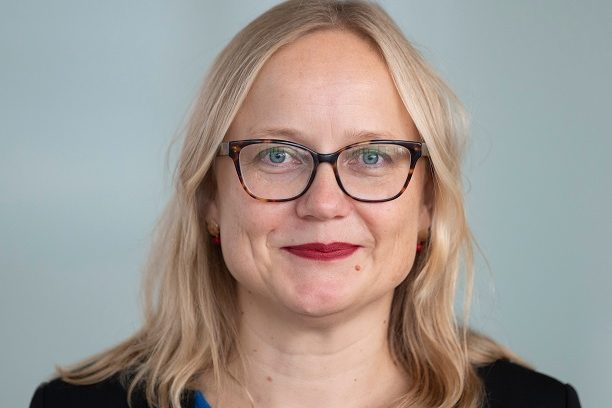
“For Eucor, the EGTC has at times acted as a catalyst, accelerating and streamlining processes: it initiates new developments and drives them forward.”
Prof. Dr Melanie Arndt
Vice Rector for Internationalisation and Sustainability
As a historian, what is your view after ten years of EGTC?
As a historian, I am particularly interested in the interplay between change and continuity. This is precisely what can be observed so clearly in the development of Eucor and the EGTC. For Eucor, the EGTC has at times taken on the accelerating and clarifying role of a catalyst: it initiates new developments and drives them forward. At the same time, the EGTC strengthens the network by providing organisational cohesion. Its professional management is an enormous asset for such a large-scale international network as Eucor.
Where do you see Eucor and the EGTC in ten years’ time?
I envisage a genuine European campus in the Upper Rhine region, with even greater student mobility and multilingualism in practice, potentially supported by AI. We will have more integrated study programmes, more joint PhD programmes and new bridge professorships to drive innovative research. At the same time, knowledge transfer will be further developed by stepping up cooperation with regional stakeholders. Europe can flourish where cooperation is the norm. My wish is to preserve and further develop this Europe of togetherness – where cooperation is a matter of course – and to inspire others with it, thereby contributing to the greatest possible mutual understanding and exchange.
Eucor – The European Campus
Eucor – The European Campus is a trinational network comprising five universities in the Upper Rhine region at the heart of Europe. Its members include the Universities of Basel, Freiburg, Haute-Alsace and Strasbourg, as well as the Karlsruhe Institute of Technology (KIT). Together, the universities pool the expertise of 17,000 researchers, 9,900 PhD students and 120,000 undergraduates in a strong research and economic region spanning France, Germany and Switzerland. The aim is to establish a clearly defined academic space without walls or borders, with an international reach.
Dies Universitatis 2026
This year’s Dies Universitatis will take place on 19 May 2026 and will focus on the theme “Internationality as a strategy for the future – universities in global transformation.” Particular emphasis will be placed on collaboration within Eucor – The European Campus, which in 2026 will celebrate the tenth anniversary of its European Grouping of Territorial Cooperation (EGTC). The ceremony will also honour individuals who have rendered outstanding services to the University. Another highlight will be the premiere of the university’s new promotional film.