Short News
This section offers a miscellaneous of updates on the activities and achievements of FRIAS, its fellows, and alumni. If you have news to share, please contact us. The archive includes news dating back to summer 2024. Subscribe to our channels to stay up to date.
Sven Beckert (FRIAS Fellow 2008/09 und Marie S. Curie FCFP Fellow 2019) sprach im Interview mit der Badischen Zeitung über die zentralen Argumente seines Werks Kapitalismus. Geschichte einer Weltrevolution. Im Vorfeld seiner Buchvorstellung in Freiburg hob er dabei auch die Rolle der Region um Basel, den Schwarzwald und das Elsass als eines der frühesten integrierten Zentren der europäischen Baumwollindustrie hervor.
Daniela Müller (FRIAS Fellow 2021-25) has published the monography Katharer des Nordens at Herder Verlag. The study offers a historical investigation into the presence and influence of the Cathar movement in Northern Europe during the 12th and 13th centuries, tracing their impact along the Rhine, Meuse, and Seine.
Manuela Boatcă (Rector’s Fellow 2021/22) has been appointed Theodor Heuss Professor at The New School for Social Research in New York. The sociologist, whose expertise lies in decoloniality, global inequalities, and transnational entanglements, will hold the professorship for one year.
Marlene Bartos (FRIAS Direktorin 2015/17) und Johanna Pink (FRIAS Steuerungsgremium) erhalten vom Europäischen Forschungsrat zwei ERC Advanced Grants. Sie forschen zur Gedächtnisbildung im Gehirn sowie zur Entstehung der islamischen Moderne anhand von Traditionen der Koranauslegung im 19. Jahrhundert.
Sabine Döring (Guest Researcher 2026/27) is currently examining the relationship between individual freedom, solidarity and the common good as part of her Volkswagen Foundation Fellowship. In line with this research, she recently published an article on the current challenges facing liberal democracy. Earlier this year, she introduced a monograph focusing on the relationship between politics and academic freedom (both publications in German).
Eva von Contzen (FRIAS Fellow 2017/23 & 2024/25) berichtet in der FAZ über den FRIAS-Workshop „Anglophone Studies in the Age of Generative AI: Scholarship, Criticism, Teaching“ von Gero Guttzeit (FRIAS Fellow 2025/26). Im Mittelpunkt stehen die Herausforderungen und Chancen generativer KI für Literatur-, Kultur- und Sprachwissenschaften.
Evie Malaia (FRIAS Fellow 2017/18) has published a study in PLoS One that builds on her FRIAS project on the role of visual and linguistic complexity in language development. The article investigates how age and language experience shape visual perception.

On 20 May 2026, the FRIAS Project Group Agrivoltaics inaugurated an agrivoltaic pilot plant on the grounds of the Faculty of Engineering at the University of Freiburg. In addition to generating scientific insights, the plant aims to raise public interest in agrivoltaics as a key future technology in the energy sector. The event received widespread coverage in the press.

Collins C. Ajibo (FRIAS Fellow 2024/25) has co-authored a book titled Regional Trade Agreements, Prosperity and the Global South, providing a thought-provoking critical analysis of the functionality of regional trade regimes in the Global South. His FRIAS research project (2024/25) examined existing gaps in the African Continental Free Trade Agreement (AfCFTA).
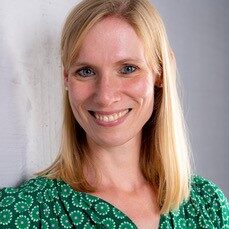
Eva von Contzen (FRIAS Fellow 2017-23 und 2024/25) ist Sprecherin des neuen Sonderforschungsbereichs (SFB) „Historische und transkulturelle Erzähltheorie“ der Universität Freiburg. Die Deutsche Forschungsgemeinschaft (DFG) fördert den SFB über einen Zeitraum von vier Jahren mit rund zehn Millionen Euro.
Brian B. Laird (FRIAS Fellow 2016/17) was selected as a Fellow of the American Physical Society from the APS Division of Computational Physics.

Monika Fludernik (FRIAS Fellow 2019/20) has published a book on “Developments in Narrative Structure” , tracing developments in English narrative structure from the late Middle Ages to the early modern period. FRIAS hosted the book launch in April 2026.
Cristina Espinosa (YAS Fellow from 2021 to 2024 and member of the first YAS cohort) has published an article titled “Mobilizing rights of nature and science to contest industrial mining: The legal battle of Intag’s frogs” in the journal “Environment and Planning E: Nature and Space”.
275 Forschende bewarben sich um die Early-Career-Rescue-Fellowships des FRIAS und zweier weiterer IAS. 14 von ihnen können damit trotz Einschränkungen der Wissenschaftsfreiheit in den USA weiterforschen. SWR und Badische Zeitung berichten.
Tim Krieger (Rector’s Fellow 2025) spricht zusammen mit Daniel Nientiedt in einem Interview der Badischen Zeitung über die Aktualität liberalen Denkens und das Spannungsverhältnis von Demokratie und Liberalismus.
FRIAS-Direktorin Barbara Di Ventura leitet ein grenzüberschreitendes Projekt für Upcycling-Prozesse in der industriellen Anwendung. Dafür wird sie mit Seed Money vom trinationalen Universitätsverbund Eucor – The European Campus gefördert.
Katharina Stein (YAC Member 2025/28) forscht im Rahmen der Young Academy for Cultures and Societies Research zum Thema „Das gute Leben – Was macht eine gute Gesellschaft aus?“. Im Podcast Doing Time, Talking Crime des Max-Planck-Instituts sprach sie über „Söldner 2.0: Wenn Staaten ihr Gewaltmonopol outsourcen“ und gab dem Völkerrechtsblog ein Interview zur Privatisierung von Krieg.
Tim Krieger (Rector’s Fellow 2025) erläutert in einem Beitrag in der Frankfurter Rundschau zusammen mit Christian Hagist und Stefan Seuffert, wie man Schulden vor dem Hintergrund der Generationengerechtigkeit konsequent bilanziert.
Jürgen Osterhammel (FRIAS Distinguished Fellow) ordnet im Nachrichtenmagazin DER SPIEGEL die US-amerikanische Außenpolitik von US-Präsident Donald Trump aus der Perspektive seiner globalhistorischen Forschung ein.
Max Trommsdorff (Project Group Member 2025/26) has published a review article in Nature Review Cleans Technology on the current scientific state of agrivoltaic cropping systems. This research ties in on his work with the Group Project Agrivoltaics at FRIAS.
Ina Kuhn (YAC Member 2025/28) erforscht die kulturellen Hintergründe der Abstinenz von Alkohol. In der Badischen Zeitung gibt sie sieben Ratschläge, wie ein Leben ohne Alkohol gelingen kann.

Sven Beckert (Marie S. Curie Fellow 2018/19) has published a book on the global history of capitalism, he worked on during his fellowship at FRIAS. It was widely discussed in German and international media and is regarded as groundbreaking within the scientific community.
FRIAS-Direktor Ralf von den Hoff erzählt in der Badischen Zeitung über die wissenschaftlich Freiheit der YAC, zu der Frage forschen, was ein gutes Leben und eine gute Gesellschaft ausmacht
Tim Krieger (Rector’s Fellow 2025) hat in der Badischen Zeitung die Verleihung des Wirtschaftsnobelpreises 2025 kommentiert. Welche Rolle Macht in der Ökonomie spielt, schildert er in einem Artikel mit Lars Feld (Rector’s Fellow 2014) und Justus Haucap in der Frankfurter Allgemeinen Zeitung.

Austrian Federal President Alexander Van der Bellen has awarded Jürgen Osterhammel (FRIAS Distinguished Fellow) the Austrian Decoration for Science and Art at the request of the Federal Ministry for Women, Science and Research. This is one of the highest cultural honors of the Republic of Austria.
Andrew I. Port (Marie S. Curie FCFP Fellow 2015/16) has published the book “Germany“, which traces the country’s transformation from the divided nation of the late 1940s to the stable democracy of today. The publication relates closely to his research at FRIAS on inner-German debates about confronting the Nazi past and shaping post-war foreign policy.
John Eicher (Marie S. Curie FCFP Fellow 2021/22) has published the article A Provincial Pandemic: European Ignorance of the 1918 ‘Spanish’ Influenza as a Shared Event. Drawing on a project he pursued at FRIAS, he shows how Europeans misunderstood and marginalized the influenza pandemic.
Karola Kreitmair (Marie S. Curie FCFP Fellow 2022/23) has published an article titled The Fundamental Fallacy of ‘Empathic AI, based on research conducted during her FRIAS alumni stay in 2024.
Linus Ubl (FRIAS Early Career Fellow 2024/25) has co-edited the volume Multivocality and Responsiveness. Medieval Literature in Dialogue, together with Racha Kirakosian. The collection, which grew out of a FRIAS workshop and concert, situates Almut Suerbaum’s work within broader debates on medieval literary dialogue.
Hans Joas (FRIAS Distinguished Fellow 2021-23) hat im Suhrkamp Verlag ein neues Buch mit dem Titel “Universalismus. Weltherrschaft und Menschheitsethos” veröffentlicht. Darin geht er wann und wo das Ethos entstanden ist, das aller Menschen bei moralischen und politischen Entscheidungen zu berücksichtigen.
FRIAS-Direktor Ralf von den Hoff spricht in der Badischen Zeitung über das neue US-Fellowship-Programm – eine gemeinsame Initiative des FRIAS und zweier weiterer baden-württembergischer Institutes for Advanced Studies mit dem Ziel, Wissenschaftler:innen zu unterstützen, die ihre Forschung in den USA nicht fortsetzen können.
Giancarlo Urzúa (Marie S. Curie Fellow 2023/24) was promoted to full professor at the Faculty of Mathematics, Pontificia Universidad Católica de Chile in June 2025.
Gil Rabak (Marie S. Curie FCFP Fellow 2021/22) has published a book called “Crude Creatures“, he worked on during his fellowship at FRIAS. It provides a critical revision, correcting the accepted rosy narrative of Black women and men’s portrayals in Yiddish culture.
Catherine McBride (Senior Fellow 2017/18) updated updated third edition Catherine of “Children’s Literacy Development: A Cross-Language Perspective” was published at Routledge. She completed the book during her stay as a FRIAS Alumna.
Philipp Kellmeyer (Senior Fellow 2019-21) hat der Badischen Zeitung ein Interview zum Thema KI gegeben. “Wir erleben den größten technologischen Feldversuch in der Geschichte der Menschheit,” sagt der KI-Experte.

Der renommierte Globalhistoriker und FRIAS Distinguished Jürgen Osterhammel erhält die Ehrendoktorwürde der Universität Freiburg. Der Festakt fand am am 14.07.2025 in der Aula der Universität Freiburg statt.
Elmira Akhmetova’s (Alexander von Humboldt Fellow 2021-23) book “Muslim Women in Science, Past and Present” was published in February by Cambridge University Press.
Felicitas Opwis (FRESCO Fellow 2021-25) published a book called “Ethics and Legal Analogy (Qiyas) in 5th/11th Century Legal Theory“. Since January, she has also been appointed “Sultan Qaboos Bin Said Professor of Arabic Language and Culture” at Georgetown University.
Niels Grüne (Marie S. Curie FCFP Fellow 2015/16) successfully completed his habilitation process in October 2024 with the study “‚Verkäufer in Rebus publicis‘. Korruption als politisches Argument und Konfliktfeld in der Frühen Neuzeit,” which is partly based on the work he did at FRIAS. He was also promoted to Associate Professor of Modern History at Innsbruck University in November 2024.
Philipp Höfele (YAS Fellow 2024/27) has published a special issue on the topic “Societal implications of bioinspired technologies” in the journal “Technology in Society”, together with researchers from the University of Freiburg’s livMatS Cluster of Excellence.
Christina Grozinger (FRESCO Fellow 2022-25) has been named the new director of the Huck Institutes of the Life Sciences at Penn State University in January 2025.
Hussam Hussein (member of the YAS’ first cohort) has been co-author of an article in the journal Nature examining how global academic institutions evaluate researchers for academic promotion.
Elisabeth Piller (Internal Fellow 2024/25) has been honoured with the Synergy Grant by the European Research Council (ERC). Piller is investigating how the scarcity of resources affected the period during both World Wars.
Karsten Schubert (Junior Fellow 2022/23) has published a new book titled Lob der Identitätspolitik addressing the recurring critique that identity politics, despite its anti-discrimination aims, risks leading democracy into the confines of tribalism.

In mid-October, the second cohort of members within the Young Academy for Sustainability Research (YAS) was ceremonially welcomed with a very positive interim evaluation.
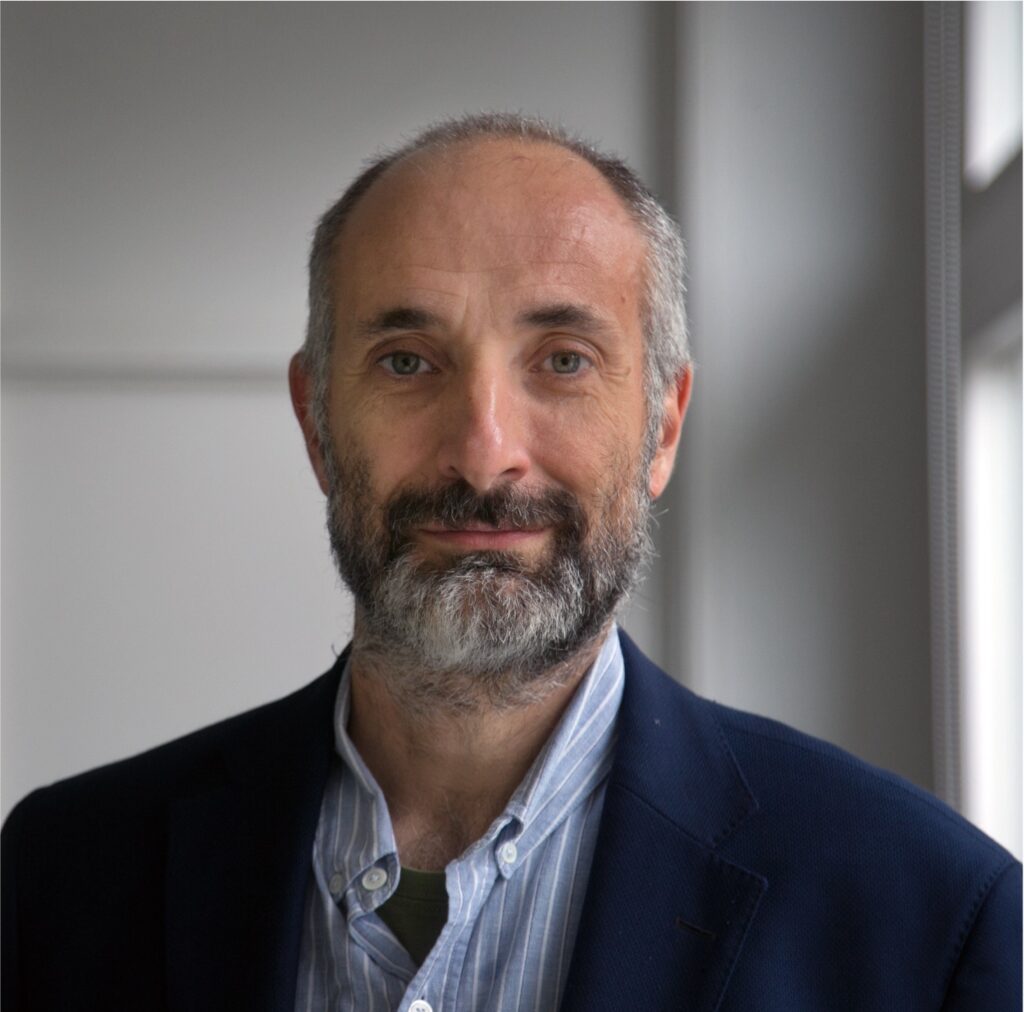
The doctoral network QU-ATTO, coordinated by Giuseppe Sansone (Senior Fellow 2024/25), will receive funding through the Marie Skłodowska-Curie Doctoral Network programme.
FRIAS Co-Director Barbara Di Ventura has attracted some media attention by creatively blending two of her passions—music and science—into “musical abstracts.”
Massimo Leone (Senior Fellow 2024) has been selected as Senior Fellow at HIAS, the Hamburg Institute of Advanced Studies, where he will be doing research from September 1, 2024, until June 30, 2025.
Benjamin Nathans (Marie S. Curie FCFP Fellow of 2022) is the author of To the Success of Our Hopelessness, a book about the soviet dissident movement.
Henrike Lähnemann (Senior Fellows 202374) recently published a substantially expanded English version of the book ‘UN-erhörte Frauen’ that has been launched at FRIAS in July 2023. The Life of Nuns. Love, Politics, and Religion in Medieval German Convents is now available open access.
Peter Arkadiev (Senior Fellow 2023/24) has recently received a position as principal investigator for a three-years DFG project titled ‘Typology and diachrony of ambifixation’ at the University of Potsdam, starting in December 2024.
Silja Vöneky (FRIAS Research Focus Group Artificial Intelligence) has been elected as a judge at the Constitutional Court by the Baden-Württemberg State Parliament.

Starting June 21, an interactive exhibition presents the findings of the Collaborative Research Center “Heroes, Heroization, Heroisms”, headed by FRIAS Director Ralf von den Hoff.
Sabine Dabringhaus (Senior Fellow 2020/21) was appointed for a second term of office as Secretary of the Philosophical-Historical Class and thus also Vice President of the Heidelberg Academy of Sciences and Humanities.