History of the Institute

The Beginnings: Philosophy
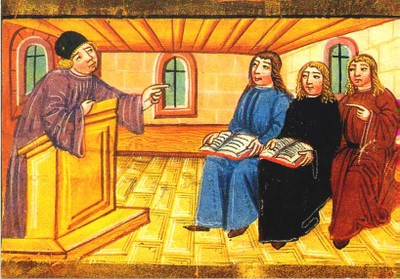
In the early days of universities, studies began at the so-called Faculty of Arts with the “seven liberal arts” ( Artes Liberales ): first the Trivium consisting of the three language-based subjects grammar, logic, and rhetoric, followed by the Quadrivium the four mathematical disciplines of arithmetic, geometry, harmonics, and astronomy. Students would then proceed to one of the “higher faculties”: law, medicine, or theology. From logic (often referred to at the time as “dialectics”), philosophy emerged as an academic discipline, and the Faculty of Arts evolved into the Faculty of Philosophy. Mathematics and the natural sciences were taught there, gradually developing out of arithmetic, geometry, and astronomy. This basic structure remained in place in Baden until 1837. It was not until 1910 that the original Faculty of Philosophy in Freiburg was divided into the Faculty of Philosophy and the Faculty of Mathematics and Natural Sciences.
Early period: Universalists
Since its founding in 1457, mathematics has been taught at the University of Freiburg. The first lecturer was Magister Johann Kerer, who began teaching mathematics in 1460 when instruction commenced. However, this was still far from a modern mathematics degree: teaching likely focused mainly on advanced arithmetic skills and geometry. In the early period, professors in the Faculty of Philosophy were generalists and frequently changed chairs and universities, and complete records of names are not available. According to Gericke (1955), several mathematics professors from Freiburg’s first three centuries are known, the most notable being Erasmus Oswald Schreckenfuchs (1511–1575).

From 1750: New professorships
From around 1750 onward, largely complete records of mathematics professors are available. At the beginning of the 18th century, there were only five professorships in the Faculty of Philosophy (for history, logic, mathematics, physics, and rhetoric), but additional chairs were established in the second half of the century, including one for applied mathematics. At that time, however, this term referred more to applied physics and engineering. Subjects taught included surveying and military architecture. Mathematics comprised the traditional disciplines of arithmetic and geometry, supplemented by newer developments such as algebra, logarithms, and trigonometry, while differential calculus was not yet taught in Freiburg. Professors still moved between chairs (for example, Steinmeyer between logic and metaphysics, mathematics, and physics), though conditions were becoming more stable. The university also established a collection of mathematical and physical instruments, the “Mathematical-Physical Cabinet,” which was given its own hall in 1759 and, according to Schneider (2006), „already resembled a kind of institute “, while also apparently serving the public as a museum. In 1876, it was divided into separate mathematical and physical collections.
Baden 1837: University Reform
A major educational reform took place in Baden in 1837: elementary instruction was transferred from the Faculty of Philosophy to secondary schools (Gymnasien), and the Abitur became the prerequisite for direct entry into higher faculties without a prior general course of study. This created a demand for subject teachers, leading to the establishment of mathematics as an independent field of study. Initially, however, the reform caused a sharp decline in student numbers: fewer than 20 of the approximately 250 students in Freiburg were enrolled in the Faculty of Philosophy, compared to about a quarter of more than 600 students previously, with up to 100 attending mathematics lectures.
At the same time, Prussian reform ideas and developments in mathematics (inspired by Gauss) began to take effect, and mathematics professors gradually became active researchers. During this transitional period, Carl Buzengeiger (1819–1835) and Ludwig Oettinger (1836–1869) held the mathematics professorship. Oettinger initiated the founding of the Seminar for Mathematics and Natural Sciences, the predecessor of today’s Mathematical Institute.


The first professor of mathematics: Paul Du Bois-Reymond
Paul Du Bois-Reymond is generally regarded as the first modern mathematics professor in Freiburg. He taught there from 1870 to 1874 and had studied in Königsberg and Berlin, bringing contemporary mathematics to Freiburg. From that point onward, mathematics studies in Freiburg began to include lectures on differential and integral calculus as well as analytic geometry, followed by more advanced courses. In addition to Du Bois-Reymond, Ludwig Kiepert was appointed associate professor in 1872; a second full professorship in mathematics was established in 1894. In 1923, a regular associate professorship for applied mathematics (in the modern sense) was created, which became a third full professorship in 1954. The number of professorships continued to grow until the 1970s, reaching around 16, and has remained largely stable since then.
The Department of Pure Mathematics is the largest within the institute. It is the successor to the former Mathematical Institute and comprises all professorships that were not assigned to separate institutes or departments.
Among the four smaller departments of the Mathematical Institute today, the Department of Applied Mathematics is the oldest. It was established in 1944 by Henry Görtler as the Institute of Applied Mathematics, although applied mathematics had already been represented since 1914 by a private lecturer. From 1957 to 1977, the Institute for Applied Mathematics and Mechanics of the German Aerospace Research Establishment was also affiliated with the University of Freiburg.
Beginning in 1898, in the spirit of Felix Klein, a teaching assignment for teacher training in didactics was given to an “experienced schoolteacher” (Gericke, 1955). This tradition continues to the present day: for a period of three to six years, a schoolteacher is seconded to the department established in 1953 as the Department of Elementary Mathematics and Didactics (today the Department of Mathematics Education ).
At the suggestion of Jakob Lüroth, the “Seminar for Actuarial Science” was founded in 1906; lectures in actuarial mathematics were given by Alfred Loewy. This seminar was a precursor to the Department of Mathematical Stochastics , which was founded in 1958 as the Department of Mathematical Statistics. Dietrich Morgenstern was appointed in 1962 to the first chair of Mathematical Statistics in Freiburg and developed the department into an independent institute.
The youngest department still in existence is the Department of Mathematical Logic : Hans Hermes was appointed from Münster in 1966 to the newly established chair of Mathematical Logic and Foundations of Mathematics (the second of its kind in Germany) and built up the department. This field, too, had an earlier predecessor in the work of Ernst Zermelo.
In 1987, the Faculty of Mathematics founded an Institute of Computer Science , which became part of the newly established Faculty of Applied Sciences (now the Faculty of Engineering) in 1994.
Also emerging from mathematics—more precisely from the Institute for Applied Mathematics and Mechanics—is the Computing Center of the University of Freiburg. In 1958, the German Research Foundation provided the institute with a Zuse 22, its first mainframe computer. Theodor Fromme, one of the programmers of the Z22, had already been a guest at the Mathematical Colloquium in 1951.
For a long time, the Mathematical Institute of the University of Freiburg maintained close ties with the Mathematical Research Institute Oberwolfach , founded in 1944 by Wilhelm Süss. Initially, “Oberwolfach” was administered by the Mathematical Institute: until 1994, its directors were exclusively professors from Freiburg (Süss, Schneider, Barner). In more recent years, the institute has become increasingly independent and has been a member of the Leibniz Association since 2005.
Finally, it is worth mentioning the significant teaching contribution of the Mathematical Institute to other fields of study. This tradition can already be seen in the work of Paul du Bois-Reymond, whose lectures on “elementary mathematics” (including commercial arithmetic) were also intended for students of administrative sciences. Today’s logic courses for computer science and philosophy, in a sense, complete the circle back to the university’s origins in the seven liberal arts.

Initially, the Faculty of Arts was located in the “Pfauenburse” on the site of today’s “Old University” (Alte Universität) on Bertoldstraße.
Over time, individual townhouses were gradually combined into a larger complex, later simply referred to as “the Burse” (No. 27 on the Sickinger map of 1589 ).
Even after renovations in 1570 and 1725, the façade of the Old University still clearly reflects its origin as a collection of separate buildings: the Pfauenburse was situated between the University Church and the former fire wall, still visible today in the stepped gable.


From 1578 onward, the then still small university moved into two buildings on Rathausplatz, which (after major renovations around 1900) now form Freiburg’s “New Town Hall” (Neues Rathaus). Until 1876, the “Mathematical-Physical Cabinet” was housed here, a collection of mathematical and physical instruments, some of which can still be seen today at the Uniseum.
After the suppression of the Jesuit order in 1773, the university took over the Jesuit College built on the site of the Burse as its main building, and mathematics was also allocated rooms there. Today, this complex is known as the “Old University” and currently houses the Uniseum and the University College Freiburg.


In 1901, the institute moved into a newly constructed building at Hebelstraße 40 (now Albertstraße 23b), together with geology, mineralogy, and geography. One of the mathematics lecture halls is still located today in what is now the Geological Institute.
Between 1922 and 1944, mathematics returned to the Old University; afterward, due to war damage, it was housed in various locations before moving back into the institute building in 1951.
In 1969, the Department of Applied Mathematics (and initially also the Department of Mathematical Logic) moved into a new building at Hermann-Herder-Straße 10, where most of its staff are still based today. The University of Freiburg’s computing center, which originated as part of the Institute of Applied Mathematics, is also located in this building.

Other departments and institutes, as well as the dean’s office of the Faculty of Mathematics, were initially spread across various locations.

In 1996, all departments and institutes except Applied Mathematics were brought together in the former employment office building at Eckerstraße 1, which had been constructed in 1958 on the site of buildings destroyed during the war.
To the left of the entrance, there is a Wall mosaic (1959), designed by Bert Jäger and executed by Richard Bampi, which was restored in 2023.
In front of the entrance lies a Stolperstein commemorating Julius Elsner.


In 2018, Eckerstraße was renamed Ernst-Zermelo-Straße.

The mathematics professors of the first three centuries are only partially known. They frequently moved between chairs and universities and were not mathematicians in the modern sense. When they pursued specific scholarly interests, these were often more closely related to astronomy.
Johannes Kerer
(* 1430 in Wertheim; † 1506 in Augsburg)

- Studied the Artes Liberales in Heidelberg
- Professor in Freiburg from 1457 to 1474 at the newly founded university; the first to teach Mathematics at the University of Freiburg
- After 1474, parish priest at Freiburg Minster; received a doctorate in law in 1481; Rector of the University of Freiburg in 1481/82; from 1493 auxiliary bishop in Augsburg
- Founded the student residence Collegium Sapientiae (then located on Herrenstraße; today associated with the Catholic University Community on Lorettostraße)
- Wikipedia
- Epitaph of Johannes Kerer in the University Church of Freiburg
Erasmus Oswald Schreckenfuchs
(* 1511 in Merckenstein; † 1575 in Freiburg)

- Probably studied in Basel; student of Sebastian Münster
- Professor of Mathematics and Hebrew in Freiburg from 1552 to 1575; Rector of the University of Freiburg in 1563/64
- Wikipedia — Mathematics Genealogy Project
- Succeeded by his son Laurentius Schreckenfuchs
- Illustration from Jean-Jacques Boissard, ‘Bibliotheca chalcographica’
- Source: Wikimedia Commons (see original for licensing information)

Christoph Scheiner
(* 1573 in Markt Wald; † 1650 in Neisse)

- Professor of Mathematics at the University of Freiburg from 1620 to 1621;
- First Jesuit professor of Mathematics in Freiburg after the Faculty of Philosophy was taken over by the Jesuit order in 1620 Wikipedia Renowned astronomer, considered one of the co-discoverers of sunspots
- Portrait by Christoph Thomas Scheffler (detail)
- Source: Wikimedia Commons (see original for licensing information)

The professors of mathematics at the University of Freiburg, listed in chronological order from the dissolution of the Jesuit Order in 1773.
Ignaz Zanner
(* 1725 in Eichstätt; † 1801 in Freiburg)

- 1759–1777 (or 1779?*) Professor of Mathematics, later of Physics; Rector of the University of Freiburg in 1779/80
- One of the few Jesuits who were allowed to continue teaching at the university after the dissolution of the Jesuit order, which had previously provided almost all professors of the faculty.
- He was in charge of the mathematics and physics collection, which was given its own hall in 1759 and represented a kind of early form of a mathematics and physics institute within the university. Remaining items from the collection, including an astronomical clock, designed by Zanner, are on display at the Uniseum.
- Remaining objects from the collection including an astronomical clock, can be seen today at the Uniseum Freiburg

Philipp Steinmeyer
(* 1710 in Würzburg; † 1797 in Freiburg)

- Professor of Mathematics from 1750 to 1753; Professor of Pure Mathematics from 1778(oder 1780?*)–1792; Rector of the University of Freiburg in 1783/84
Also served as Professor of Logic and Metaphysics; dismissed after the dissolution of the Jesuit order in 1773, but reinstated in 1775 as Professor of Physics. - German Biography
- Introduced the ideas of Christian Wolff (strongly influenced by Gottfried Wilhelm Leibniz) to Freiburg. According to [Schreiber 1860]:
„However, he had to hide [Wolf’s works], which had been slipped to him by loyal friends, in the straw mattress of his bed, and, in the strictest confidence, ask the Halle philosopher himself for written clarification of certain doubts. With the dissolution of his order (1773), he was finally freed from this intellectual tyranny.“
Paris Guiliani

- Acting Professor of Mathematics from 1776 to 1777
- Originally from Innsbruck
Johann Baptist Eberenz
(* 1723 in Saspach; † 1788 in Freiburg)
- Professor of Applied Mathematics from 1778 to 1788 (previously in architecture and mechanics); also Director of Hydraulic Engineering and Inspector of the Rhine islands; Rector of the University of Freiburg in 1771/72
- German Biography
- Taught a wide range of subjects: „1. Mechanics, 2. Theory of Gravity, 3. Mill architecture, 4. Hydrostatics, 5. Hydraulics, 6. Water engineering, 7. Aerometry, 8. Optics, 9. Dioptics, 10. Catoptics, 11. Perspective, 12. Astronomy, 13. Geography, 14. Shipping, 15. The Art of Sundials, 16. Chronology.“ [Gericke 1955, S. 46]
Also authored a book on algebra, though with some difficulties in handling the concept of irrational numbers.
Thaddäus Rinderle
(* 1748 in Staufen; † 1824 in Freiburg)

- Professor of Applied Mathematics from 1788 to 1818; also Professor of Pure Mathematics from 1792 to 1795
Originally a Benedictine monk (e.g., in St. Peter in the Black Forest). The last monk among Freiburg’s mathematicians and reportedly the last professor to lecture in monastic habit. - Wikipedia — Biographies from Baden
More about Rinderle’s life and work in the Speech by Julius Schneller on the occasion of the academic memorial service for Thaddäus Rinderle, 1826 - „He appears to have had an exceptional talent for practical mechanics […] he devoted himself to the creation of all manner of mechanical contraptions, the ingenious design of which secured him a professorship in mathematics at Freiburg in 1788 […] Did not leave significant scientific publications, according to contemporary accounts.“ (Lüroth in: Biographies of Baden, see above)
- His astronomical clock is preserved in the Furtwangen Clock Museum.
- His epitaph reads:
He determined many things mathematically with numbers and symbols. But the hour of death remains more unknown than X. - An elementary school in his hometown of Staufen is named after him.


Andreas Seipel
- From Konstanz
- Served from 1795 to 1819, initially as a provisional lecturer in Pure Mathematics, later as an associate professor
- According to[Gericke 1955, S. 47f]: „he appears to have been unhappy in this position and soon came into conflict with both students and the faculty.“
Carl Heribert Ignatius Buzengeiger
(* 1771 in Tübingen; † 1835 in Freiburg)

- Professor of (Pure and Applied) Mathematics from 1819 to 1835
- Wikipedia — Mathematics Genealogy Project — Biographies from Baden — German Biography
- Likely the first Freiburg Mathematics professor to publish original research in mathematics. Author of A Simple and Concise Presentation of Differential Calculus, according to [Gericke 1955] „individual papers on binomial coefficients, chain bridges, […] right-angled spherical triangles.“ However, the work he is said to have been engaged in during his time in Freiburg has not been published.
- Teacher of Karl Feuerbach, the discoverer of the Feuerbach circle. For its publication, Buzengeiger wrote a preface that is worth reading from a historical standpoint, in which he makes clear that he understands himself as a mathematical researcher pursuing research for its own sake:
„And so we have reached the point of having to admit that, while we have no conception of how mathematics could still have an epoch equal in its effect to any of those before it; yet this was surely always the case before a new epoch arrived. […] But this study in itself always remains good, noble, and of the utmost influence for one’s entire life; therefore this should deter no one from devoting themselves to it. Moreover, the domain of this science remains inexhaustible, and there is still infinitely much that can be done which is worthy of the gratitude of contemporaries and of posterity […]“ - „M. Cantor (Deutsche Biographie) describes Buzengeiger’s character as exceptionally amiable, noting in particular his wit, which reportedly had an “electrifying” effect.“
- Rudolf Fritsch: A teacher and two pupils: Buzengeiger, v. Staudt und Feuerbach, in: Sund, Timmermann (eds.) „Launched“. Konstanz 1979.
Ludwig Oettinger
(* 1797 in Edelfingen on the Tauber; † 1869 in Freiburg)

- 1836–1869 Professor of Mathematics; 1846/47, 1850/51 and 1862/63 (Vice-)Rector of the University of Freiburg.
Probably the last professor of Mathematics at the University of Freiburg who was also, and initially, a theologian. - Wikipedia — Mathematics Genealogy Project — Badische Biographien — German Biography
- Oettinger was the first Freiburg Mathematics professor to publish in a modern academic manner. Zentralblatt lists 39 publications between 1834 and 1868, including 36 articles in Crelle’s Journal. However, in his contribution to Deutsche Biographie, Cantor offered a critical assessment:
„[…] the ‘Investigations on the Analytical Faculties’ […] should be read with caution, as the use of infinite series and certain limiting processes must be regarded as more careless than a mathematician should permit.“
Lüroth expressed a similar view in Badische Biographien:
„In some of his later works, Oettinger does not adhere to the level of rigor that had become generally accepted in Germany (and earlier in France) by around 1850. Lasting value, however, is found in his diligent and insightful investigations of certain games of chance and government bonds, as well as in his broader work on political arithmetic.“ - In addition to his academic work, Oettinger also served temporarily as an advisor on vocational education to the regional government in Freiburg and as head of the district administrative office.
Hubert Müller
(* 1840 in Gießen; † 1927 in Freiburg)

- Lecturer from 1866 to 1870; appointed Associate Professor of Mathematics in 1870
- According to Gericke (1955): “In 1866, he received his doctorate and habilitation in Freiburg on the basis of a dissertation on systems of curves of first and second degree.” “He became known as the author of school textbooks.”
- Mathematics Genealogy Project
- Obituary by Tautz in the DMV 66 Annual Report (1963)
- In his autobiography “A Fortunate Retrospective on Nine Decades” (Freiburg, 1952), Heffter gives a detailed account of his years in Freiburg.
Listed are the salaried professors (full professors, associate professors, and honorary professors).
Lecturers, some of whom held the title of “associate professor” without a corresponding appointment, are included for this period (where applicable, with links to Wikipedia). Hans von Mangoldt (1881–82), Jakob Horn (1890–92), Wolfgang Krull (1922–28), Heinrich Kapferer (1926–41), Reinhold Baer (1928), Arnold Scholz (1930–34), Wilhelm Maier (1937).
The following descriptions highlight selected notable aspects, often with reference to Freiburg. They do not aim to provide a full assessment of the mathematical work, which can be found via the indicated links.
Paul Du Bois-Reymond
(* 1831 in Berlin; † 1889 in Freiburg)
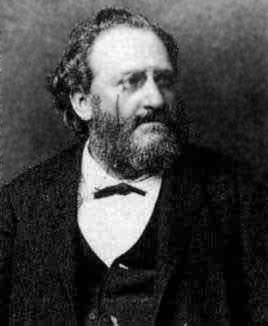
- University of Freiburg: 1870–1874, Full Professor of Mathematics
Modern mathematics studies in Freiburg began under Du Bois-Reymond. - Academic biography: Initially studied medicine, then mathematics in Königsberg and Berlin, where he received his doctorate in 1859 under Ernst Eduard Kummer. He habilitated in Heidelberg in 1865 and became an associate professor there. From Freiburg, he was appointed to Tübingen (doctoral advisor to, among others, Otto Hölder) and later to the Technical University of Berlin.
Member of the Leopoldina. - Links: Wikipedia — MacTutor — Mathematics Genealogy Project — German Biography
- Dokumente: Materialsammlung zu Du Bois-Reymond in den “Heidelberger Texten zur Mathematikgeschichte”
Ludwig Kiepert
(* 1846 in Breslau; † 1934 in Hannover)

- University of Freiburg 1871 Lecturer, 1872–77 Associate Professor of Mathematics
- Academic biography: Studied mathematics in Breslau and Berlin, where he received his doctorate in 1870 under Karl Weierstrass. After his time in Freiburg, he became professor in Darmstadt and Hannover.
Kiepert was a founding member of the German Mathematical Society and served as its president in 1916. - Links: Wikipedia — Mathematics Genealogy Project — German Biography
- Images: Oberwolfach Photo Collection
Johannes Thomae
(* 1840 in Laucha on the Unstrut; † 1921 in Jena)

- University of Freiburg: 1874–79, Full Professor of Mathematics
- Academic biography: Studied mathematics in Halle, Göttingen, and Berlin; received his doctorate in 1864 in Göttingen under Ernst Schering. Habilitated in Göttingen in 1866, later moved to Halle, where he became associate professor in 1872. After Freiburg, he was appointed professor in Jena.
Member of the Leopoldina. - Links: Wikipedia — MacTutor — Mathematics Genealogy Project — German Biography
- Image: Oberwolfach Photo Collection
- Literature: Obituary by Liebmann in the DMV Annual Report 30 (1921).
Ferdinand (von) Lindemann
(* 1852 in Hannover; † 1939 in München)
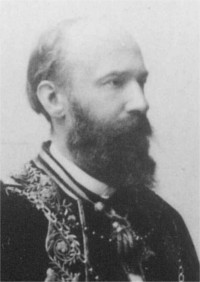
- University of Freiburg: Associate Professor (1877–1879), Full Professor (1880–1883)
Proved the transcendence of π in Freiburg in 1882 (see also below under ‘Documents’).
The Mathematical Institute’s Young Researchers’ Prize is named after Lindemann.
His bust is located in the Department of Mathematics. - Academic biography: Studied mathematics in Göttingen and Erlangen, where he received his doctorate in 1873 under Felix Klein. Habilitated in Würzburg in 1877. From Freiburg, he was appointed in 1883 to Königsberg (doctoral advisor to, among others, David Hilbert, Hermann Minkowski, and Arnold Sommerfeld), and in 1893 to Munich.
Member of the Leopoldina; ennobled in 1918 for his achievements. - Links: Wikipedia — MacTutor — Mathematics Genealogy Project — German Biography
- Images: Oberwolfach Photo Collection
Ludwig Stickelberger
(*1850 in Buch, Kanton Schaffhausen; † 1936 in Basel

- University of Freiburg: Associate Professor (1879–1894), Full Professor of Mathematics (1894–1919)
- Academic biography: Studied mathematics in Heidelberg and Berlin, where he received his doctorate in 1874 under Karl Weierstrass. Habilitated in Zurich in 1874.
Member of the Leopoldina and the Heidelberg Academy of Sciences. - Links: Wikipedia — Mathematics Genealogy Project — German Biography
- Literature: Nachruf by Heffter in the DMV 47 Annual Report (1937)
„[…] His work reflects a commitment to the Gauss motto “pauca sed matura” (“few, but ripe”). He identified and filled essential gaps in foundational theories, often bringing developments to completion and giving them their final, simplest form. […]
His high standards also shaped his teaching; his lectures were considered demanding, but former students later emphasized how much they had learned from them.“
Jacob Lüroth
(* 1844 in Mannheim; † 1910 in München)

- University of Freiburg: Full Professor of Mathematics (1883–1910); (Pro-)Rector in 1889
Lüroth played a key role in strengthening mathematics institutionally in Freiburg and founded the “Seminar for Actuarial Science.” - Academic biography: Initially studied astronomy in Bonn, then mathematics in Heidelberg, where he received his doctorate in 1865 under Otto Hesse. Further studies in Berlin with Karl Weierstrass and in Giessen with Alfred Clebsch. Habilitated in Heidelberg in 1867; from 1868 professor in Karlsruhe and from 1880 at the Technical University of Munich.
Member of the Heidelberg Academy of Sciences.
Among his lesser-known results is the discovery of what later became known as the “Student’s t-distribution”. - Links: Wikipedia — MacTutor — Mathematics Genealogy Project — Badische Biographien (Heffter) — German Biography
- Documents: Inaugural address as Vice-Chancellor (1889) On the History of Calculus
- Literature: Obituary by Brill and Noether in the DMV Annual Report 20 (1911) (or as a pdf)
Alfred Loewy
(* 1873 in Rawitsch near Posen; † 1935 in Freiburg)

- University of Freiburg: Lecturer (1897), Associate Professor (from 1902), Honorary Full Professor (from 1916), Full Professor of Mathematics (1919–1933); forcibly retired in 1933
- Academic biography: Studied mathematics in Breslau, Munich, Berlin, and Göttingen; received his doctorate in 1894 under Ferdinand von Lindemann in Munich. Habilitated in Freiburg in 1897. Doctoral advisor to, among others, Wolfgang Krull and F. K. Schmidt.
Member of the Leopoldina and the Heidelberg Academy of Sciences. - Links: Wikipedia — MacTutor — Mathematics Genealogy Project — German Biography
- Loewy became blind in the late 1920s and subsequently wrote the book Great Blind Men. He died in 1935 following an operation. His wife, Therese Loewy, took her own life in 1940 before deportation. Stumbling blocks for the Loewys are situated in front of their last shared flat at 14 Reichsgrafenstraße and in front of Therese Loewy’s last flat in Katharinenstraße 12 (see also: Stolpersteine in Freiburg: Alfred Loewy, Therese Loewy)
- Literature:
V. Remmert „Alfred Loewy (1973–1935) in Freiburg“ in: Announcements from the DMV (3) 1997.

Julius Weingarten
(* 1836 in Berlin; † 1910 in Freiburg)
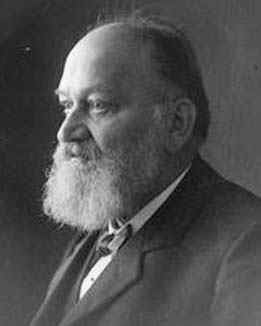
- University of Freiburg: Honorary Professor (1905–1908).
- Academic biography: Studied in Berlin; received his doctorate in Halle in 1864. Professor at the Berlin Building Academy and the Technical University of Charlottenburg (later TU Berlin).
Member of the Leopoldina. - Links: Wikipedia — MacTutor — Mathematics Genealogy Project — German Biography
- Image: Oberwolfach Photo Collection — MacTutor
Lothar Heffter
(* 1862 in Köslin; † 1962 in Freiburg)
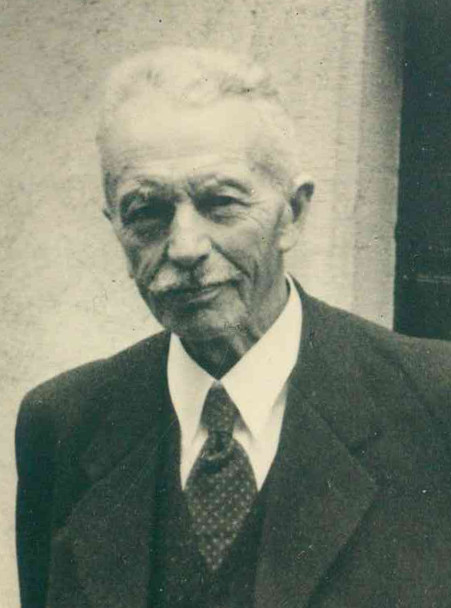
- University of Freiburg: Full Professor of Mathematics (1911–1931); (Pro-)Rector 1916/17; Honorary Citizen of the University (1942).
Founded the Association of Friends of the University of Freiburg in 1925, stepping down as chairman in 1933. - Academic biography: Studied mathematics and physics in Heidelberg and Berlin, where he received his doctorate in 1886 under Lazarus Fuchs. Previously held professorships in Giessen, Bonn, Aachen, and Kiel.
Founding member of the German Mathematical Society (DMV); named honorary member in 1952
Member of the Leopoldina and the Heidelberg Academy of Sciences. - Links: Wikipedia — Mathematics Genealogy Project — German Biography
- Documents: Last entry by Lothar Heffter in the Freiburg Colloquium’s guest book
- Literature:
- Obituary by Tautz in the DMV 66 Annual Report (1963)
- In his autobiography “A Joyful Look Back at Nine Decades” (Freiburg, 1952), Heffter gives a detailed account of his time in Freiburg.

Oskar Bolza
(* 1857 in Bad Bergzabern; † 1942 in Freiburg)

- University of Freiburg: Honorary Professor (1911–1932)
- Academic biography: Studied mechanical engineering, physics, and mathematics in Berlin, Heidelberg, Strasbourg, and Göttingen; received his doctorate in 1886 under Felix Klein. After positions in England and the United States, he became professor at the University of Chicago in 1893 before returning to Germany in 1910.
Member of the Leopoldina - Links: Wikipedia — MacTutor — Mathematics Genealogy Project — German Biography
- Image: Oberwolfach Photo Collection — MacTutor
- Literature: Obituary by Heffter in the DMV Annual Report 53 (1943)
Ernst August Ansel
(* 1874 in Ulm; † 1952 in Freiburg)

- University of Freiburg: Lecturer (1913), Associate Professor of Applied Mathematics (1918–1944)
- Academic biography: Studied (presumably) physics in Stuttgart and Göttingen, where he received his doctorate in 1913 under Emil Wiechert. Co-founder of the German Geophysical Society.
- Links: Mathematics Genealogy Project — German Biography
Ernst Zermelo
(* 1871 in Berlin; † 1953 in Freiburg)

- University of Freiburg: Honorary Professor of Mathematics (1926–1935, 1946–1953). Resigned his honorary professorship in 1935 following a denunciation after refusing to begin his lectures with the Hitler salute; reinstated in 1946.
In 2018, Eckerstraße, home to the Mathematical Institute was renamed Ernst-Zermelo-Straße in his honor. - Academic biography: Studied mathematics, physics, and philosophy in Berlin, Halle, and Freiburg; received his doctorate in 1894 under Hermann Amandus Schwarz in Berlin. Subsequently assistant to Max Planck. Habilitated in Göttingen in 1897; appointed professor there in 1905. In 1910 he took a chair at the University of Zurich, which he resigned in 1916 for health reasons. Zermelo founded axiomatic set theory; the “Z” in the ZFC axioms stands for “Zermelo”.
Member of the Heidelberg Academy of Sciences,
recipient of the Ackermann–Teubner Memorial Prize (1916). - Links: Wikipedia — MacTutor — Mathematics Genealogy Project — German Biography
- Image: Oberwolfach Photo Collection — MacTutor
- Literature: H.D. Ebbinghaus „Ernst Zermelo. An Approach to His Life and Work“ Springer 2015.

Gustav Doetsch
(* 1892 in Köln; † 1977 in Freiburg)

- University of Freiburg: Full Professor of MatheNachrufmatics (1931–1961); suspended 1945–1951
- Academic biography: Studied mathematics, physics, and philosophy in Göttingen, Munich, Berlin, and Frankfurt; received his doctorate in 1920 under Edmund Landau in Göttingen. Habilitated in Hanover in 1921; Lecturer in Halle (1922–1924); later professor in Stuttgart.
Member of the Heidelberg Academy of Sciences. - Links: Wikipedia — MacTutor — Mathematics Genealogy Project — German Biography
- Literature:
- V. Remmert „Officer – Pacifist – Officer: the mathematician Gustav Doetsch (1892–1977)“, in: Journal of Military History 59 (2000)
- V. Remmert: „Mathematicians at War. Power Struggles in Nazi Germany’s Mathematical Community: Gustav Doetsch and Wilhelm Süss“, in: Revue d’histoire des mathématiques 5 (1999)
Wilhelm Süss
(* 1895 in Frankfurt am Main; † 1958 in Freiburg)

- University of Freiburg: Full Professor of Mathematics (1934–1958); suspended May–December 1945; Rector 1940–1945 and again in 1958.
Founded what is now the Department of Mathematics Education. - Academic biography: Studied mathematics in Freiburg, Göttingen, and Frankfurt, where he received his doctorate in 1922 under Ludwig Bieberbach; from 1928 Lecturer in Greifswald.
He was particularly influential as a scientific organizer:- Chairman of the German Mathematical Society (1938–1945).
- Founder (1944) and director until 1958 of the “Reich Institute for Mathematics” in Oberwolfach, now the Mathematical Research Institute Oberwolfach.
- Links: Wikipedia — MacTutor — Mathematics Genealogy Project — German Biography
- Image: Oberwolfach Photo Collection
- Documents: Last entry by Wilhelm Süss in the register of the Freiburg Colloquium
- Literature:
- V. Remmert: „Mathematicians at War. Power Struggles in Nazi Germany’s Mathematical Community: Gustav Doetsch and Wilhelm Süss“
in: Revue d’histoire des mathématiques 5 (1999) - For further works by Volker Remmert on Süss, see his bibliography under ‘Sources, Bibliography and Image Licences’
- Obituary by Gericke in the DMV 69 Annual Report (1967/68)
- V. Remmert: „Mathematicians at War. Power Struggles in Nazi Germany’s Mathematical Community: Gustav Doetsch and Wilhelm Süss“
Henry Görtler
(* 1909 in Calgary; † 1987 in Freiburg)

- University of Freiburg: Associate Professor (1944–1949), Full Professor of Applied Mathematics (1949–1976). Founder of the Institute of Applied Mathematics.
- Academic biography: Studied mathematics in Munich and Giessen, where he received his doctorate in 1936 under Harald Geppert. From 1937 to 1944, he worked at the Kaiser-Wilhelm-Institute for Fluid Dynamics in Göttingen under Ludwig Prandtl, where he habilitated in 1940.
- Member of the Leopoldina and the Heidelberg Academy of Sciences.
- Links:Wikipedia — Mathematics Genealogy Project — German Biography
- Image:Oberwolfach Photo Collection — more photos
- Literature:
- Obituary (Witting)
- A critical analysis of Görtler’s work is still pending

Listed are below are the professors appointed after 1945 who are now deceased, including honorary professors. Short-term visiting professors (with the exception of Sperner), professors extraordinarii, privatdozenten, and scientific councillors are not listed.
Gerrit Bol
(* 1906; † 1989)

- Uni Freiburg: 1938–40 Privatdozent with a teaching assignment, 1948–71 Professor of Geometry (successor of Doetsch who had been suspended)
- Acad. Biography: 1928 completed PhD in Leiden under Willem van der Woude , 1931 Habilitation (post-doctoral qualification) completed in Hamburg under Wilhelm Blaschke. 1942–45 Professor in Greifswald.
- Links: Wikipedia — Mathematics Genealogy Project
- Images: Oberwolfach Photo Collection
- There seems to be no literature concerning Bol. He was a Dutch national. He belonged (like Blaschke, who he worked for at the time) to the signatories of the Vow of allegiance of the Professors of the German Universities and High-Schools to Adolf Hitler and the National Socialistic State. As a Dutch combatant, he briefly was a prisoner of war in Germany.
Emanuel Sperner
(* 1905; † 1980)

- Uni Freiburg: 1946–1949 Visiting Professor
- Acad. Biography: Studied in Freiburg and Hamburg, where he completed his PhD under Otto Schreier and his Habilitation (post-doctoral qualification). He was a Professor in Königsberg and from 1943–45 at the „Reichsuniversität Straßburg“. From 1949 onward Professor in Bonn, later in Hamburg.
- Links: Wikipedia — Mathematics Genealogy Project — German Biography
- Images: Oberwolfach Photo Collection
- Literature: Sperner was active within the DMV as a ‘science policymaker’; see V. Remmert, ‘The German Mathematicians’ Association in the Third Reich’ (Parts 1 and 2), in: Mitteilungen der Deutschen Mathematiker-Vereinigung (12) 2004.
Hans Richter
(* 1912; † 1978)

- Uni Freiburg: 1950–1955 Honorary Professor (Statistics)
- Acad. Biography: Studied, among others, mathematics, physics, and philosophy in Leipzig, where he obtained his PhD in 1936 under B.L. van der Waerden and completed his Habilitation (post-doctoral qualification) in 1940. From 1955 onward Professor in München.
- Links: Wikipedia — Mathematics Genealogy Project — German Biography
- Images: Oberwolfach Photo Collection
Kuno Fladt
(1889; † 1977)

- Uni Freiburg: 1956–77 Honorary Professor (Mathematics Education)
- Acad. Biography: Studied in Stuttgart and Tübingen, completed his PhD in 1920 under Alexander von Brill and Gerhard Hessenberg. 1936–38 Chair of the MNU, from 1938 to 1945, as the ‘Reich Clerk for Mathematics and Natural Sciences’ (Reichssachbearbeiter für Mathematik und Naturwissenschaften), he was the primary point of contact for the National Socialist regime on matters regarding mathematics instruction in schools. During the ‘Third Reich’ and the early years of the Federal Republic of Germany, Fladt had a formative influence on the development of mathematics education.”
- Links: Wikipedia — Mathematics Genealogy Project — German Biography
- Images: Oberwolfach Photo Collection
- Literature: Henning Heske „Kuno Fladt und das Reichssachgebiet Mathematik und Naturwissenschaften im Nationalsozialistischen Lehrerbund“, in: Beiträge zum Mathematikunterricht, Münster 2019.
Friedrich W. D. Levi
(* 1888; † 1966)

- Uni Freiburg: 1951 Visiting Professor, 1958 Interim Professor for Süss, 1959–63 Honorary Professor (Algebra)
- Acad. Biography: Studied mathematics and physics in Würzburg, Straßburg, Leipzig, and Göttingen, completed his PhD in 1911 under Heinrich Weber in Straßburg. Completed his Habilitation (post-doctoral qualification) in 1919 in Leipzig. 1923 Extraordinary Professor in Leipzig, let go in 1935 due to being a Jewish Scientist. Went to India to the University of Calcutta and later to the Tata-Institute in Bombay. 1952 Return to Germany as Professor at the FU Berlin.
- Links: Wikipedia — Mathematics Genealogy Project — German Biography
- Literature: O.H. Kegel, V. Remmert „Friedrich Wilhelm Daniel Levi (1888-1966)“
in: Wiemers, Gerald (Hrsg.): Sächsische Lebensbilder 5, Leipzig/Stuttgart 2003.
Joachim Nitsche
(* 1926; † 1996)

- Uni Freiburg: 1959–91 Chair of Applied Mathematics
- Acad. Biography: Studied Mathematics in Göttingen, completed his PhD in 1951 under Wolfgang Haack at the TU Berlin and his Habilitation (post-doctoral qualification) in 1953.
- Links: Wikipedia — Mathematics Genealogy Project — German Biography
- Images: Oberwolfach Photo Collection
Theodor Schneider
(* 1911; † 1988)
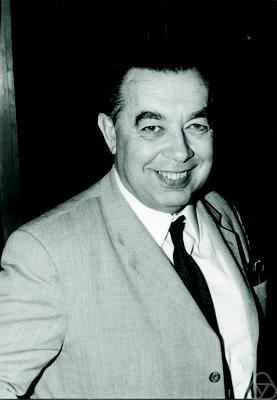
- Uni Freiburg: 1959–76 Chair of Number Theory (succeeding Süss)
- Acad. Biography: Studied mathematics in Frankfurt am Main, where he completed his PhD in 1934 under Carl Ludwig Siegel and his Habilitation (post-doctoral qualification) in 1939 in Göttingen, 1953 Professor in Erlangen
1959–63 Director of the Oberwolfach Research Institute for Mathematics
Proved the Gelfond–Schneider theorem in 1934, solving Hilbert’s seventh problem - Links: Wikipedia — MacTutor — Mathematics Genealogy Project — German Biography
- Images: Oberwolfach Photo Collection
Martin Barner
(* 1921; † 2020)

- Uni Freiburg: 1962–89 Chair of Differential Geometry
- Acad. Biography: Studied mathematics in Freiburg, obtained his PhD in 1950 under Gerrit Bol, 1957 Professor in Karlsruhe
1968–1977 Chair and 1993 honorary member of the DMV
1963–94 Director of the Oberwolfach Research Institute for Mathematics - Links: Wikipedia — Mathematics Genealogy Project — German Biography
- Images: Oberwolfach Photo Collection
Helmut Klingen
(* 1927; † 2017)

- Uni Freiburg: 1962–63 Professor, 1963–93 Chair of Complex Analysis
- Acad. Biography: Studied mathematics and physics in Göttingen, where he obtained his PhD in 1955 under Carl Ludwig Siegel. 1957 Habilitation (post-doctoral qualification) in Göttingen
- Links: Wikipedia — Mathematics Genealogy Project — German Biography
- Images: Oberwolfach Photo Collection — weiteres Foto (Mitte)
Dietrich Morgenstern
(* 1924; † 2007)

- Uni Freiburg: 1962–71 Chair of Mathematical Statistics
- Acad. Biography: Studied at the TU Berlin, where he completed his PhD in 1952 under Werner Schmeidler, and again in 1955 under Eberhard Hopf in Indiana (USA), he completed his Habilitation (post-doctoral qualification) in Berlin. Professor in Münster and from 1971 onward in Hannover.
- Links: Wikipedia — Mathematics Genealogy Project — German Biography
- Images: Oberwolfach Photo Collection
Hans Hermes
(* 1912; † 2003)

- Uni Freiburg: 1966–77 Chair of Mathematical Logic in the newly founded ‘Department of Mathematical Logic and Foundations of Mathematics’.
- Acad. Biography: Studied, among others, mathematics, physics, and philosophy in Freiburg, Münster, and Munich. Completed his PhD in 1938 under Heinrich Scholz and Adolf Kratzer in Münster and his Habilitation (post-doctoral qualification) in 1947 in Bonn, from 1953 onward Professor in Münster (succeeding Scholz).
Member of the Heidelberger Akademie der Wissenschaften - Links: Wikipedia — Mathematics Genealogy Project — German Biography
- Images: Oberwolfach Photo Collection
- Documents: Faculty Obituary
Hermann Witting
(* 1927; † 2010)

- Uni Freiburg: 1972–92 Chair of Mathematical Statistics (succeeding Morgenstern)
- Akad. Biografie: Studied mathematics in Braunschweig and Freiburg, where he obtained his PhD in 1953 under Görtler and his Habilitation (post-doctoral qualification) in 1957. At first Professor in Karlsruhe and Münster.
1978–79 Chair of the DMV
Member of the Heidelberger Akademie der Wissenschaften; Honorary Doctorate from Münster University - Links: Wikipedia — Mathematics Genealogy Project — German Biography
- Images: Oberwolfach Photo Collection
- Documents:
Friedrich Flohr
(* 1927; † 2010)

- Uni Freiburg: 1963 Akademischer Rat (Academic Councilor/Assistant Professor), 1974–89 Professor of Differential Geometry and Mathematics Education
- Acad. Biography: Studied in Braunschweig and Freiburg and completed his PhD in 1959 under Martin Barner in Karlsruhe.
- Links: Wikipedia — Mathematics Genealogy Project
Rolf Wallisser
(* 1937; † 2014)

- Uni Freiburg: 1974–2002 Professor of Number Theory
- Acad. Biography: Studied mathematics, physics, and philosophy in Freiburg, where he obtained his PhD in 1965 under Theodor Schneider and his Habilitation (post-doctoral qualification) in 1971.
- Links: Mathematics Genealogy Project — German Biography
- Documents: Faculty Obituary
Karl Nickel
(* 1924 † 2009)

- Uni Freiburg: 1976–89 Chair of Applied Mathematics (succeeding Görtler)
- Acad. Biography: Studied mathematics and physics in Göttingen and Tübingen, where he obtained his PhD in 1949 under Hellmuth Kneser. Habilitation (post-doctoral qualification) in 1958 in Karlsruhe and 1961–76 Professor in Karlsruhe.
- Links: Wikipedia — Mathematics Genealogy Project — German Biography
- Images: Oberwolfach Photo Collection
Dieter Wolke
(* 1942; † 2015)

- Uni Freiburg: 1977–2008 Chair of Number Theory (succeeding Th. Schneider)
- Acad. Biography: Studied mathematics, physics, and philosophy in Marburg, where he completed his PhD in 1969 under Hans-Egon Richert.
- Links: Mathematics Genealogy Project — German Biography
- Documents:
- Faculty Obituary
- „Freiburg und die Kreiszahl π“ (Video mp4 ; Audio mp3), Lecture delivered on the occasion of the Gauss Lecture on 27 April 2007.
Helmuth Gericke
(* 1909; † 2007)

- Uni Freiburg: 1934 Assistant of Süss, 1941 Habilitation (post-doctoral qualification), 1952–63 Adjunct Professor, 1984–2007 Honorary Professor (History of Mathematics)
His research interests included, among others, the History of Mathematics at the University of Freiburg. - Acad. Biography: Studied mathematics, physics, and Geography in Greifswald, Marburg, and Göttingen and obtained his PhD in 1932 in Greifswald. From 1963 onward Professor for History of the Natural Sciences in München.
- Links: Wikipedia — Mathematics Genealogy Project — German Biography
- Images: Oberwolfach Photo Collection
Felix Hausdorff
(* 1868 in Breslau; † 1942 in Bonn)
- Studies in mathematics and astronomy in Freiburg, summer semester 1888
- Famous mathematician, co-funder of Topology, successful author under the Nom de Plume Paul Mongré.
- German biography — Wikipedia — Mathematics Genealogy Project — MacTutor
Joseph Wirth
(* 1879 in Freiburg; † 1956 in Freiburg)
- Studies in socio-economics and mathematics in Freiburg; 1906: PhD in Mathematics; officially supervised by Ludwig Stickelberger, de facto by Loewy
- 1921/22 Chancellor of the Weimar Republic
- Wikipedia
Rudolf Carnap
(* 1891 in Wupptertal; † 1964 in Santa Monica)
- Studies in mathematics, physics, and philosophy in Jena and Freiburg
- Member of the Vienna Circle, Proponent of Logical Empiricism
- German Biography — Wikipedia
Wolfgang Krull
(* 1899 in Baden-Baden; † 1971 in Bonn)
- Studies in mathematics in Freiburg, Rostock, and Göttingen
1921 PhD and 1922 Habilitation (post-doctoral qualification) completed under Loewy, 1928 Extraordinary Professor in Freiburg - Prominent Algebraist
- German Biography — Wikipedia — Mathematics Genealogy Project — MacTutor
Friedrich Karl Schmidt
(* 1901 in Düsseldorf; † 1977 in Heidelberg)
- Studies in mathematics, physics, and philosophy in Freiburg and Marburg
- Prominent Algebraist
- German Biography — Wikipedia — Mathematics Genealogy Project — MacTutor
Reinhold Baer
(* 1902 in Berlin; † 1979 in Zürich)
- Studies in mathematics and philosophy in Freiburg and Göttingen,
1926–29 Assistant of Loewy in Freiburg, 1928 Habilitation (post-doctoral qualification) completed under Loewy - Prominent Algebraist
- German Biography — Wikipedia — Mathematics Genealogy Project — MacTutor
Hermann Person
(* 1914 in Radolfzell; † 2005 in Gundelfingen)
- Studies in mathematics, physics, and chemistry in Freiburg and Karlsruhe
- 1967–1979 District President of the Government District of South Baden (Freiburg)
- German Biography — Wikipedia (German)
Mathematics in Freiburg
Individual Documents (in German)
-
125 Jahre Beweis der Transzendenz von π (2007)
In Freiburg, Ferdinand Lindemann proved the impossibility of squaring the circle in 1882 – available only for internal access.
-
Ernst Zermelo, der Schöpfer der axiomatischen Mengenlehre (2007)
by Heinz-Dieter Ebbinghaus, „550 Jahre Albert-Ludwigs-Universität Freiburg“, Band 4: Wegweisende naturwissenschaftliche und medizinische Forschung – available only for internal access.
-
Ratschläge für die Studierenden der Mathematik an der Universität Freiburg i.Br. (1926)
published by the Mathematics Professors.
-
Postkarte von Albert Einstein an Ernst Zermelo
The Zermelo Papers, University archive Freiburg.
-
Informationen über das Mathematisch-Physikalische Kabinett
University of Freiburg.
-
Abschnitt über die Mathematische Fakultät (1982)
in: „525 Jahre Albert-Ludwigs-Universität Freiburg“ – available only for internal access.
-
Eröffnung der Ausstellung “Mathematik zum Anfassen” (2007)
On the occasion of the university’s 550th anniversary in 2007 – a greeting from Dean Jörg Flum, reflecting on mathematics over the course of 550 years.
The History of Mathematics in Freiburg (in German)
-
Zur Geschichte der Mathematik an der Universität Freiburg i.Br. (1955)
Helmuth Gericke
-
Das Mathematisches Institut der Universität Freiburg 1900-1950 (2001)
by Volker Remmert, Toepell, Michael (publisher) Mathematik im Wandel. Anregungen zum fächerübergreifenden Mathematikunterricht, Band 2, Hildesheim/Berlin 2001, S. 374–392 – available only for internal access.
-
Das Mathematische Institut 1945–2006 (2007)
in: „550 Jahre Albert-Ludwigs-Universität Freiburg“, Band 5: Institute und Seminare, Herausgegeben von Bernd Martin, Verlag Karl Alber, Freiburg/München 2007 – available only for internal access.
-
List of all publications by Volker Remmert in relation to the Mathematical Institute in Freiburg (2019)
University History
-
550 Jahre Albert-Ludwigs-Universität Freiburg (2007)
including:
Iris Becher „Naturalia, Scientifica, Artificilia: Die Kabinette des 18. Jahrhunderts und die Anfänge der wissenschaftlichen Sammlungen an der Universität Freiburg“, in: Band 2: Von der hohen Schule zur Universität der Neuzeit, herausgegeben von Dieter Mertens und Heribert Smolinsky.
Volker Remmert „Das Problem der Kriegsforschung in Mathematik und Naturwissenschaften: Wilhelm Süss als Rektor und als Vorsitzender der Deutschen Mathematiker-Vereinigung, in Band 3: Von der badischen Landesuniversität zur Hochschule des 21. Jahrhunderts, herausgegeben von Bernd Martin.
-
Geschichte der Stadt und Universität Freiburg im Breisgau (1860)
Heinz Schrieber, Geschichte der Stadt und Universität Freiburg im Breisgau, IX. Lieferung: Von Aufhebung der Jesuiten bis zu Ende des achtzehnten Jahrhunderts
-
Naturwissenschaftlich-Mathematische Fakultät 1892-1971 (1996)
Tessa Neumann, Archival Guide
-
Philosophische Fakultät 1460-1935 (2006)
Daniel Schneider, Archival Guide
-
Philosophische Fakultät 1886-1991 (2001)
Gregor Swierczyna, Archival Guide