Prof. Dr. Hans Spada
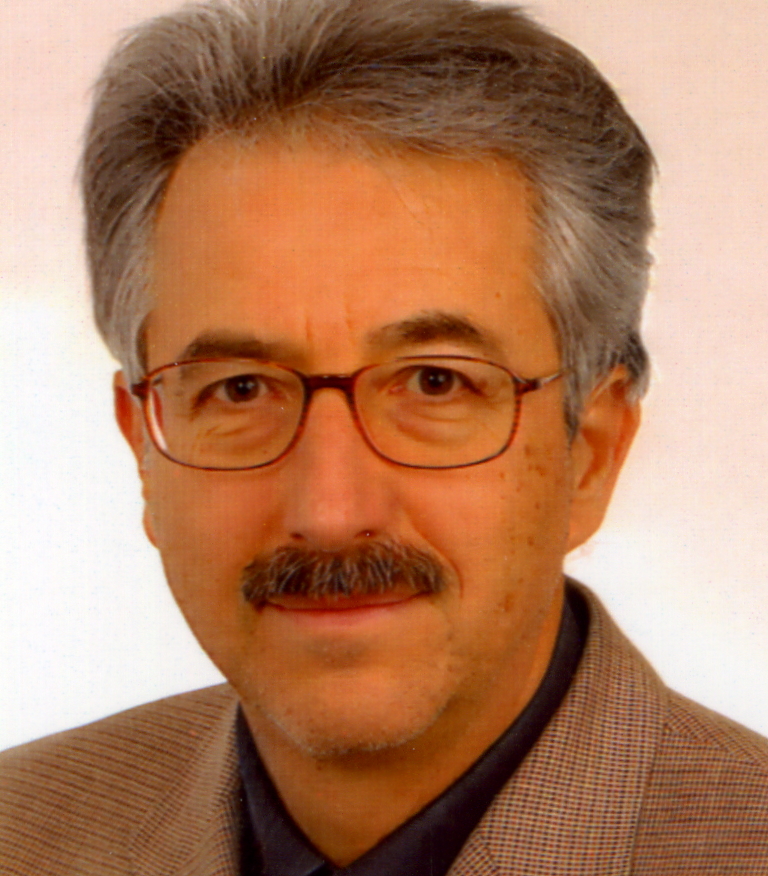
Dr. Hans Spada, Professor of Psychology (emeritus), University of Freiburg
Born: December 25, 1944
Education/Training
- University of Vienna, Austria; PhD 1969 Psychology
- University of Vienna, Austria and Kiel, Germany,Dr. Habil PD1976 Psychology
Employments/ Experience
1969-1973
University of Vienna, Austria: Assistant Professor
1973-1980
Institute for Science Education at the University of Kiel: Vice-Director of the Educational Science Department
1980-2013
University of Freiburg: Full Professor of Psychology: Cognition, Emotion, Communication
1990-1991
Dean of the Faculty of Humanities
2001-2006
Elected member of the Senate
2004-2006
Dean of the Faculty of Economics and Behavioral Sciences
2006-2012
Vice-Chairman of the University Council of the University of Freiburg
Honours, Awards and Scholarships
1989-1993
Member of the Standing Committee for the Social Sciences of ESF (European Science Foundation)
1994
Award for Excellence in Teaching (Landeslehrpreis Baden-Württemberg)
1994-present
Member of Academia Europea
1994-1996
President of the “Deutsche Gesellschaft für Psychologie (DGPs)“
1997-present
Honorary Member of Humboldt University Berlin
1998-2004
Chair of the Scientific Advisory Board of the Institute for Science Education
2001-2009
Chair of the Scientific Advisory Board of the Knowledge Media Research Center
2009-2017
Member of the Senate of the Leibniz Gemeinschaft
2010-2017
Chairman of the Senate Committee for Evaluation of the Leibniz Gemeinschaft
2011-present
Member of the International Board of Scientific Advisors, Max Planck Institute for Human Development
2011
APS Fellow for outstanding distinguished contributions to science
2017
Order of Merit, Federal Republic of Germany
Other Scientific Activities
1984-1993
Member of the Committee for Environmental Research of the Senate of the DFG
1990-1993
Member of the German Advisory Board for the International Decade of Natural Disaster Reduction
1994-1998
Chair of the ESF Program“ Learning in Humans and Machines”
1996-1999
Member of the National Committee for Global Change Research
1995-2001
Chairperson of the Priority Program of the DFG on Human Dimension of Global Environmental Change
1999-2008
Vice-Chairperson of the PhD-Program of the DFG on Knowledge Acquisition and Knowledge Exchange with New Media
2009-2012
Member of STELLAR (European Research Network of Excellence in Technology Enhanced Learning)
- Cognition and Emotion (in Cultural Contexts)
- Computer-supported collaborative learning
- Environmental Psychology and Risk Perception
Selected Projects
2000-2006:
„Instructional support for computer-mediated collaboration“ Project in SPP (DFG) Net-based knowledge communication in groups
2003-2007:
„Culture-specific self concepts, ascription of responsibility and anger“, DFG, together with Professor Seitz, Ethnology)
2009-2012:
STELLAR-„Sustaining technology enhanced learning large-scale multidisciplinary research“ (EU -Network of Excellence, funded by the European Union)
2011-2014:
„Collaborative problem solving in mathematics: What do teachers know about the quality of collaboration and how can their knowledge be further improved?“, Project in graduate school ProMatNat
2011-2014:
„Acceptance of small scale renewable energy systems“, Project in graduate school KleE
2014-2018:
“Dezentrale nachhaltige Energiesysteme”, Project in graduate school DENE
Selected Publications
2016
- Hüther, L., Müller, T. & Spada, H. (2016). Professional experience and referencing context explain variance in use of spatial frames of reference. Applied Cognitive Psychology, 30, 580-590.
2015
- Korcaj, L., Hahnel, U.J.J. & Spada, H. (2015). Intentions to adopt photovoltaic systems depend on homeowners‘ expected personal gains and behavior of peers. Renewable Energy, 75, 407-415.
2014
- Kaendler, C., Wiedmann, M., Rummel, N. & Spada, H. (2014). Teacher competencies for the implementation of collaborative learning in the classroom: A framework and research review. Educational Psychology Review, 27 (3), 505-536.
- Hahnel, U.J.J.,Gölz, S., & Spada, H. (2014). How does green suit me? Consumers mentally match perceived product attributes with their domain-specific motives when making green purchase decisions. Journal of Consumer Behaviour, 13, 317-327.
- Hahnel, U.J.J.,Ortmann, C., Korcaj, L. & Spada, H. (2014). What is green worth to you? Activating environmental values lowers price sensitivity towards electric vehicles. Journal of Environmental Psychology, 40, 306-319.
- Plesch, C. & Spada, H. (2014). Future core research areas and associated research challenges for technology-enhanced learning: Results of an international Delphi study. Int. J. Technology Enhanced Learning, 6 (2), 164-185.
2013
- Vollmer, S., Spada, H., Caspar, F., & Burri, S. (2013). Expertise in clinical psychology. The effects of university training and practical experience on expertise in clinical psychology. Front. Psychol. 4:141.
- Plesch, C., Kaendler, C., Rummel, N., Wiedmann, M. & Spada, H. (2013). Identifying areas of tension in the field of technology-enhanced learning: Results of an international Delphi-study. Computers & Education, 65, 92-105.
2011
- Deiglmayr, A. & Spada, H. (2011). Training for fostering knowledge co-construction from collaborative inference-drawing. Learning and Instruction, 21, 441-451
2010
- Deiglmayr, A. & Spada, H. (2010). Collaborative problem-solving with distributed information: The role of inferences from interdependent information. Group Processes and Intergroup Relations, 13 (3), 361-378.
- Deiglmayr, A. & Spada, H. (2010). Developing adaptive collaboration support: the example of an effective training for collaborative inferences. Educational Psychology Review, 22(1), 103-113.
- Hansen, M. & Spada, H. (2010). Supporting remote collaborate problem-solving. Applied Cognitive Psychology, 24, 9, 1297-1323.
- Spada, H. (2010). Of scripts, roles, position, and models. Computers in Human Behaviour, 26, 547-550.
2009
- Rummel, N., Spada, H., & Hauser, S. (2009). Learning to collaborate while being scripted or by observing a model. International Journal of Computer-Supported Learning, 4 (1), 69-92.
2007
- Bender, A., Spada, H., Seitz, S., Swoboda, H. & Traber, S. (2007). Anger and rank in Tonga and Germany: Cognition, emotion and context. Ethos, 35 (2), 196-234.
- Meier, A., Spada, H. & Rummel, N. (2007). A rating scheme for assessing the quality of computer-supported collaboration processes. International Journal of Computer-Supported Collaborative Learning, 2 (1), 63-86.
2005
- Rummel, N. & Spada, H. (2005). Learning to collaborate: An instructional approach to promoting collaborative problem-solving in computer-mediated settings. Journal of the Learning Sciences, 14 (2), 201-241.
2004
- Bodemer, D., Plötzner, R., Feuerlein, I. & Spada, H. (2004). The active integration of information during learning with dynamic and interactive visualizations. Learning and Instruction,14, 325-341.
2003
- Beller, S. & Spada, H. (2003). The logic of content effects in propositional reasoning: The case of conditional reasoning with a point of view. Thinking and Reasoning, 9, (4), 335-378.
2001
- Nerb, J. & Spada, H. (2001). Evaluation of environmental problems. A coherence model of cognition and emotion. Cognition and Emotion, 15 (4), 521- 551.
- Kiesel, A. & Spada, H. (Hrsg.) (2018). Lehrbuch der Allgemeinen Psychologie. Bern: Hogrefe Suisse.
- Spada, H. (Hrsg.) (2006). Lehrbuch der Allgemeinen Psychologie. Bern: Huber.
- Bromme, R., Hesse, F.W. & Spada, H. (Eds.) (2005). Barriers and biases in computer-mediated knowledge communication and how they may be overcome. Dordrecht, New York: Springer.
- Böhm, G., Nerb, J., McDaniels, T., Spada, H. (Eds.) (2001). Environmental risks: Perception, evaluation and management. Oxford: Elsevier.