TreeStability: Does Tree Diversity Protect Forests Against Climate Extremes?
Freiburg, 19 March 2026
The Chair of Silviculture has secured DFG funding for a new research project investigating whether increasing tree diversity can stabilise forest ecosystems in the face of climate change. Led by Dr. Florian Schnabel, the three-year project “TreeStability” draws on data from 25 tree diversity experiments across the globe.

The experimental forest of the Sardinilla tree diversity experiment in Panama. Data from this experiment will also contribute to the project. (Photo: Florian Schnabel)
As climate extremes grow more frequent and intense, the ability of forests to maintain their vital functions – from timber production to carbon storage – is increasingly at risk. One promising but insufficiently studied management strategy is to increase tree species richness in planted and semi-natural forests, to stabilise forest growth even under climate extremes. The German Research Foundation (DFG) has now funded a project led by Dr. Florian Schnabel at the Chair of Silviculture to investigate this question systematically. The project “Tree diversity effects on the temporal stability of forest productivity” (TreeStability) will run for three years and include one doctoral researcher position.
Data from 25 Tree Diversity Experiments Worldwide
TreeStability draws on data from TreeDivNet, the world’s largest network of tree diversity experiments. The project will analyse annually-resolved data on tree diameters and heights from 25 TreeDivNet experiments spanning tropical, subtropical, temperate, and Mediterranean biomes, covering a broad range of climatic conditions. Compared to studies in natural forests, this approach offers important advantages: it enables direct comparisons between monocultures and mixtures of increasing diversity, controls for confounding environmental variation, and thereby allows causal conclusions about the role of tree diversity in stabilising forest ecosystem functioning.
Unpacking the Mechanisms of Forest Stability
The project is structured around four work packages. The first examines diversity-stability relationships across levels of biological organisation, from individual trees and species up to the forest community. The second investigates which functional traits – particularly those linked to drought tolerance – underpin the stabilising effects of diversity. The third work package will, for the first time, test whether diversity-stability relationships strengthen as forests age, using data from the oldest tropical tree diversity experiment: the Sardinilla experiment in Panama, which is led by Schnabel. The fourth work package analyses how diversity effects on stability shift across large-scale ecological gradients and under experimental manipulations of water and nutrient availability.
“Planted forests play a central role in global restoration initiatives, and yet we still do not reliably know whether they will maintain their functions as climate extremes continue to intensify,” says Schnabel. “TreeStability will provide the experimental evidence to understand when, where, and why diverse forests are more stable.”
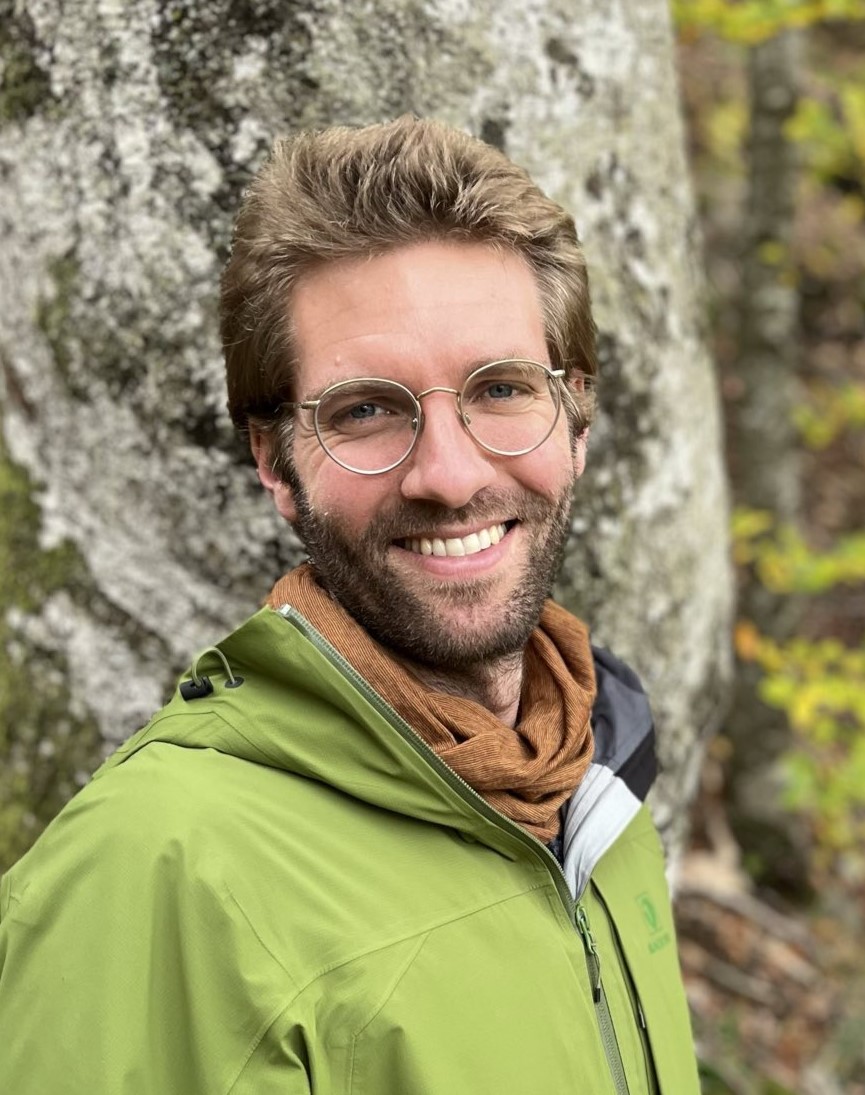
“Planted forests play a central role in global restoration initiatives, and yet we still do not reliably know whether they will maintain their functions as climate extremes continue to intensify. TreeStability will provide the experimental evidence to understand when, where, and why diverse forests are more stable.”
Dr. Florian Schnabel
Chair of Silviculture, Faculty of Environment and Natural Resources
International Networking
The project builds on established collaborations within TreeDivNet, particularly with CIRAD (Montpellier) and INRAE (Avignon). At the University of Freiburg, Prof. Dr. Michael Scherer-Lorenzen (Chair of Geobotany) will support synthesis activities in his role as co-coordinator of TreeDivNet.
The project’s findings will feed into the Excellence Cluster Future Forests. Future Forests will additionally fund an incubator project from its own resources, in order to understand how interactions between neighbouring trees influence diversity-stability relationships.