
Seal element of the university of freiburg in the shape of a flower

Signals of Life

Biological signals form the basis of life for all cells of an organism. A more precise understanding of these signals therefore provides solutions for many biological and medical challenges. Innovative research approaches enable a better understanding of complex life processes, open up pioneering therapeutic options, and and serve to significantly advance the development of the next generation of artificial intelligence.

The key research area “Signals of Life” is based on three research fields that are firmly established at the University of Freiburg and visible both nationally and internationally. They bring together researchers from the life sciences, natural sciences, and engineering:

This graphic shows a petal extending from the University of Freiburg logo. The petal bears the title of the key research area ‘Signals of Life’ with the subheadings Communication of Cells, Immunology in Health and Disease and Brain and Intelligence. Attached to the petal are four achievements of the key research area, represented as bulges. These are labelled EXC CIBSS, Leibniz-Prize 2020,2025, CRCs 1160, 1381, 1453, 1479, 1597 and CRC/TRRs 167, 179, 353, 359, 384, 417.

Three Research Fields

Communication of Cells

Immunology in Health and Disease

Brain and Intelligence

The research field Communication of Cells, which is supported predominantly by the Cluster of Excellence CIBSS and the research centre BIOSS, pools top-level interdisciplinary competencies in biological signalling research with the aim of addressing current research issues. The scientists in this research field investigate fundamental questions: How do cells respond to environmental conditions? And how do cells communicate, whether in human, animals, or plants?

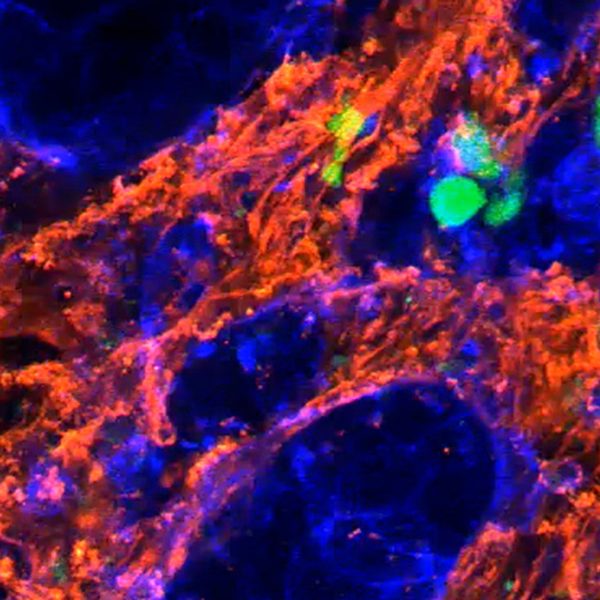
Farbige Darstellung Brustkrebszellen
Zwei Hände vor einer Computertastatur in einem abgedunkelten Raum. Daneben Laborgefäße.

The research field Immunology in Health and Disease uses approaches from immunology, cancer research, and epigenetics as a basis for understanding pathological immune responses, tumorigenesis, and metastasis. Due to the traditionally strong cooperation with biological research, new findings from signalling research on these questions are constantly being incorporated into research in this field. Interdisciplinary centres like the Comprehensive Cancer Center Freiburg (CCCF) or the Center for Chronic Immunodeficiency (CCI) provide the basis for the clinical research infrastructure. This allows to transfer the results of the research approaches to innovative diagnostics as well as the treatment of patients.

In the research field Brain and Intelligence, the neurosciences are closely interconnected with the engineering sciences and study, among other things, human-machine interfaces in the field of neurotechnologies. The research centre BrainLinks-BrainTools and the Bernstein Center Freiburg offer scientists an optimal interdisciplinary research environment. As part of the European ELLIS network, researchers further develop artificial intelligence at the highest level.

The research areas data science, modelling, and bioinformatics are an important part of the key research area “Signals of Life” and also contribute methodological expertise to the other two key research areas (“Cultures and Societies in Space and Time” and “Pathways to Sustainability”).

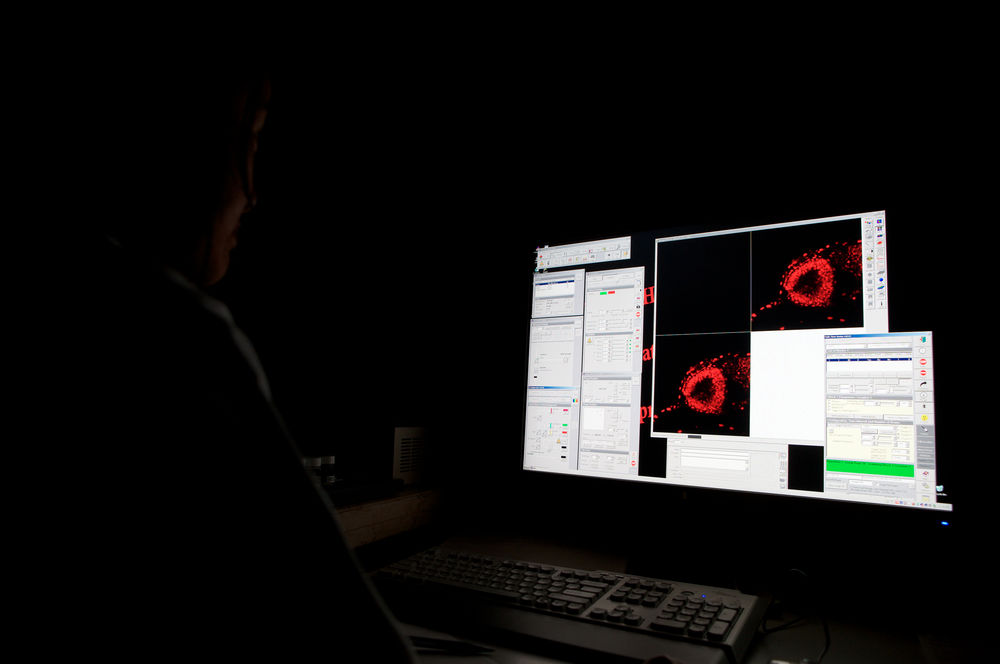
Ein Computerbildschirm gibt die Aufnahmen eines Mikroskops wieder.

Current project within the framework of the Excellence Strategy

Exzellenzcluster CIBSS – Centre for Integrative Biological Signalling Studies
The researchers at the Cluster of Excellence are dedicated to understanding the language that governs multicellular life in humans, animals and plants.

Read more

Interdisciplinary facilities and other structures

Collaborations

Selected collaborative projects and individual funding

Board of the key research area “Signals of Life”